Showing posts with label winter. Show all posts

Wednesday, January 26, 2011

Bowl o'Red


Texas chili is not an arcane art. I'm always amazed to hear of the elaborate secretive hijinx of competitive chili teams. Yes, it is a team sport in Texas. If you ever see it,
Chile Pepper Magazine is an entertaining read even if you only read the ads. Good photography, too.

Your average Texan isn't looking for the ultimate cook-off chili. What a Texan wants is a bowl o' red. It's meaty, it's smooth, and it is completely, utterly, free of beans. It doesn't take 10 hours to make or a special cut of meat. If you use hamburger, the clattering, wan ghosts of chuck wagons past will not circle your bed in the night.

Texas Chili:
1 1/2 lbs. Hamburger
1 fat clove Garlic, minced
1 teaspoon ground Cumin
1 teaspoon Chili powder
1 teaspoon Chipotle powder
1/2 teaspoon Oregano
1 teaspoon Bacon grease ( no substitutes!)
1/3 can tomato paste
water & salt
cornmeal or masa to thicken

1. In a big skillet, brown the hamburger and leave it lumpy. Drain the grease if you want to.
2. In a pot, gently fry the garlic in the bacon grease till it's soft. Add about a cup of water to stop it frying if you need to. Then stir in the tomato paste till it's smooth.
3. Add all the meat and all the spices (not the thickener). Add water to cover, and stir well.
4. Simmer gently for about 20 min. and add the salt. How much salt? More if it will go over rice, Cajun style, and less if it will go over corn chips. If you use canned tomato sauce or diced tomatoes, you'll need a lot less than if you use paste, with is unsalted (and cheaper).

At this point, it's perfectly okay to eat. But it will taste better if you turn off the heat and let it rest a few hours.

About 10 min. before serving, mix up your thickener to avoid lumps and stir it in to simmer about 10 minutes. I use ordinary yellow cornmeal; if you have masa it tastes fine. I've seen a recipe suggest using a big spoonful of Jiffy brand cornbread mix, which makes sense if you're making it, but it's very sweet by Texas standards.

Serve it plain or over corn chips. If you're just dying for that Friday night football stadium taste, squirt processed cheese over it all. (I never touch the stuff.)

And no beans. Anathema sit!
*******
Austinites of a certain age will remember Hill's, a steakhouse owned by the Goodnight ranching family, serving their beef. What amazing chili they had! (And sourdough dinner rolls I never equalled at the height of my bread-god powers.) The Goodnight ranch tried a cross breeding experiment decades ago between cows and buffalo (American bison). The experiment failed, but if you substitute ground buffalo for some of the beef, the chili will taste absolutely fabulous. Hill's was a casualty of the recession of '86-'87, but reopened in 2001; I haven't been there.


Tuesday, January 25, 2011

Thai Chicken Coconut Soup: Ka Tom Gai


There are loads of recipes out there for this soup: it's cheap, it's easy, and a beginner cook can get restaurant results on the first try. And it doesn't have to be spicy hot if you don't want it to be--it tastes perfectly fine without any chile at all. It's a myth that all Thai food is hot.

After shoveling way too much sidewalk and driveway in -1F, I had this and then a second bowl.

Thursday, January 13, 2011

man bread


When I lived in California, there was a great big fair for three adjacent counties. Lots of agricultural competition! And the baking competitions were fierce.

I grew up urban and took some persuading to enter the Tri-County Fair. Aren't county fairs strictly for shitkickers? There was no resisting the Farmer's wife's relentless good cheer on this point, especially when I was already disappointing her by not reproducing. But the first time I read the rules, I was shocked to find the category "Baked By a Man" ! It could be crackers to tiramisu, so long as the baker had the Y chromosome. Hilarious. One of the Deep Springs students smoked'em with his tiramisu my 3rd year.

Anyway, the bread in the photos was made by my husband, start to finish. It's an olive oil bread from poolish; the dark flecks are flax seed meal. The round loaf was baked the same day it was mixed. The rectangular loaf was refrigerated for the second rise and baked, cold, in the morning. Note the tiny blisters freckling the crust on the rectangular loaf--that was done without steam.

Thursday, January 6, 2011

More Chicken Under a Brick


Lemon Artichoke Heart Soup

Olive Oil Bread

Chicken Under a Brick


Chocolate Coconut pots de creme


I really wanted the chicken to be the focus of the meal, and the menu reflected that.

The soup is Greek avgolemnos with imported artichoke hearts. Early January isn't the time for fresh produce and the artichoke went well in the lemony soup. I put thyme in mine, to echo the chicken's marinade. If you put the artichoke in early and let it sit, the flavor infuses the soup without any labor by the cook.

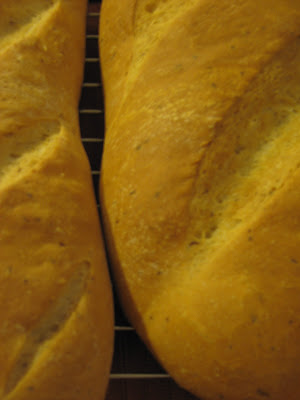
Olive oil bread because the table looks naked without it. And my kids gobbled it down while I cooked the chicken and our guest regaled us with tales of his very successful hunting trip, complete with large caliber rifles, large caliber handguns, trucks, and barbecue. Oh, and he's a priest. One of the things I love about Iowa is that almost all the clergy are avid hunters.

The chicken was the star, and turned out really well, as I wrote yesterday. Tomato sauce would have been overbearing with it, so...

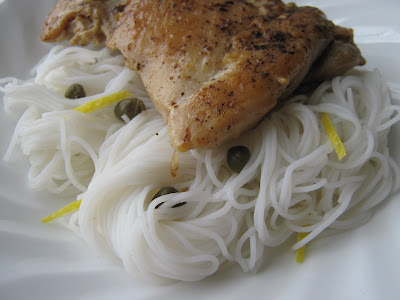
I served this with bowtie pasta in a mild picata sauce. Picata (piquant) sauce is a versatile clear pasta sauce made with lemon juice, chicken stock, and white wine. Sauteed garlic, capers, green olives, or other little flavor bombs can be added. The cook has a lot of freedom to set the tone, and I used garlic, nonpareil (very small) capers and omitted the wine. I think small pieces of green olives would be better. White wine would have clashed with the bacon, and leaving it out was fine. It's the right taste, but doesn't make for an interesting photograph. If it's new to you, grated cheese is not ever appropriate with picata sauce.

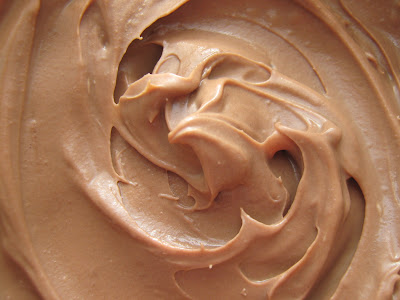
The Belgian dark chocolate coconut pudding was a huge success. It's obviously not Italian, but it's so good no one cares. My son plaintively suggested we buy larger cans of coconut.


I know diddley about wine and seldom drink it. But for what it's worth, we decided all this tangy food needed a table wine on the sweet side and not too heavy. We drank an '09 Alice White (Australian) red lexia. I've never even heard of red lexia before. But it was good, went well with the food, and wasn't expensive. Since I like Greek food and can't get Rhoditis here, we'll certainly get it again; not too many wines play well with lemon and bacon both.

And yes, I confess to a tiny bit of food styling.

Chicken Under a Brick


I'm always a little worried when trying a new recipe I haven't been served: "how do I know if I got it right?"
Since I was fortunate to eat Tom's cooking for 3 years, I felt confident making his Chicken Under a Brick from the cookbook for a guest who regularly goes to Italy. But if you're unfamiliar with the dish, have no worries when you follow his instruction. Just do what he says, and you'll nail it.

The Recipe...
is fine. Really, just do what he says. I was very happy he includes a variation for skinless, boneless chicken thighs, because that was all we could get in the all-natural chicken.

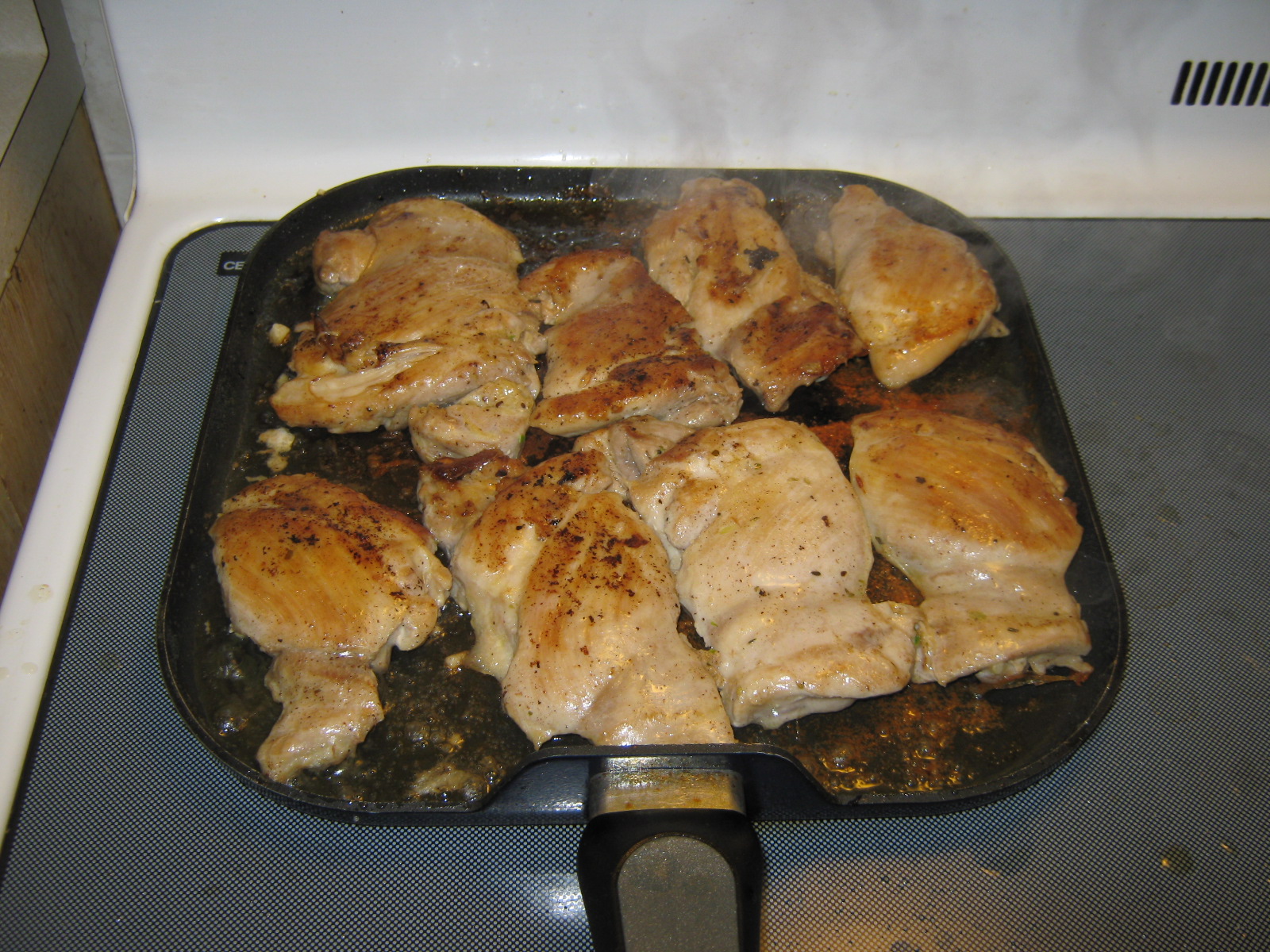
I fiddled with the recipe in two ways. I marinaded it for about 5 hours, far longer than suggested, and it wasn't overwhelmingly garlicky. In my house, time flexibility is a plus! And I didn't wrap it in bacon strips, but fried it in bacon grease & fond. It didn't crackle as it would have with bacon, but it still had a flavorful, crusty exterior.

It's pretty subtle. The meat is moist but not greasy. The bacon flavor from the hot grease doesn't penetrate, but the marinade does, so it still tastes like chicken, rather than bland hunk o' white stuff holding up bacon. I'll post the rest of the menu next.


The Method...
is classic, and I well remember Tom's collection of bricks in an out of the way corner of the Boarding House. My kitchen, alas, has no out of the way corners, being the size of a lentil. And I wanted to make a lot because leftovers make splendid spinach salad.

So, I improvised with the biggest, heaviest thing in my kitchen, a cast iron griddle that's as wide as my nonstick griddle but twice as long, so there's plenty of space for me to grab it. Serendipitous, no? It worked like a charm.


BUT, please notice I have a flat stove top, so there's no place for the grease to puddle. Since the bottom griddle didn't catch splatters, and they could just drip off the larger top griddle, a thin layer of hot grease surrounded the operation. I carefully mopped this up a couple of times and it wasn't a big deal. But if your stove isn't flat, doing what I did would be very dangerous. Use a brick or something smaller than the bottom pan. Tradition's smart on this one. If you're brickless but have nesting cast iron frying pans I think that would work well, too.

If you have a flat top stove, it's great. Be sure to use oven mitts to handle the iron griddle. It doesn't warm much itself, but the splattering grease and steam underneath could burn you. I did this twice with no trouble at all. The taste is worth it.


Wednesday, January 5, 2011

coming soon

Company's coming for dinner, so I hope to have some big posts in the next couple of days. The big story: cooking Italian Chicken Under a Brick from Tom Hudgens' new cookbook. See the link on the right!

Sunday, January 2, 2011

atsa ragu to you


A true ragu is a big hunk of meat seared and then simmered slowly in tomato sauce (usually on a rack, so it doesn't scorch on the bottom). When the meat reaches the stage of being tender but not yet falling apart, it's fished out, sliced, and served with pasta. The meat-infused sauce is then poured by each diner from a gravy boat. It takes a long time, and you have to hover over the pot a bit to make sure the meat doesn't cook past the point it can be sliced.

For special occasions, a ragu might be made with mixed meats. If you peek in the freezer of a Sicilian cook, there's often a bag of leftovers, that one extra pork chop or a marrow bone, hoarded away for just this purpose. I've never seen sea food mixed with meats or poultry in Italian cooking, but just about everything else can go into a ragu.

For my husband, it's not a special occasion ragu without some lamb. The bad news is that lamb is expensive. The good news is that the flavor really travels--other meats pick up the flavor readily. But there's a trick to this, and it works well if your life doesn't allow you to hover over the pot all day.

The trick is to control the fat. The traveling lamb flavor is in the fat, so you don't want to give it much competition. You'll need a frying pan, a simmering pot, and a crock pot.

The hunks of meat will go in the crock pot. If you actually read the instructions (does anyone but me?) they say to carefully trim all the fat off meat going into your slow cooker. It's important! The steam at the top of the slow cooker can become very hot and give oil floating on top a very unpleasant taste. When you trim the hunk of lamb, cut the fat and bone out but save them both. Discard the fat trimmed from other meats. I find it works well to have a layer of sliced raw onions on the bottom, then the meat, then sprinkle with dried herbs, and then lightly fried garlic on top. Lid on, and let it cook.


Meanwhile, mix up a plain tomato sauce in the simmering pot. I like to use tomato paste and add liquid to the desired consistency, because it's cheaper and gives me complete control over the saltiness. Because most meat and poultry has been brined before you buy it, and canned tomatoes are very salty (even the organic ones) a ragu is easily too salty. Too much salt will ruin your palate, make your Romano cheese seems bland (if you use it), and it's not good for you.

Then make plain meatballs and fry them in a non-stick frying pan. Any ground meat will do; the meatballs in the picture are ground beef mixed with an onion grated on a cheese grater and a little oregano. The whole point is for the meat to taste like meat, so don't fuss with eggs, bread crumbs, etc. Discard the grease from the pan. For once, you're not after the fond, which won't be very good because of the grated onions anyway, because they scorch very easily.

Put the meatballs, lamb bone and fat, and one bay leaf into the tomato sauce. Simmer gently a while, then let it rest. That's the picture of the sauce, with the bay leaf and a lamb bone poking out for the photo. The meatballs (no matter what kind) will pick up a lot of the lamb flavor.

When the meat in the slow cooker is almost as tender as you'd like it to be, scoop it out and add the meat (but not the pot liquid) to the tomato sauce. Simmer a while longer, and make your pasta. If all goes well, you'll have tender meat that still has distinctly different tastes, but meatballs and sauce that taste like lamb. Discard the bay leaf and lamb bone, slice the meat, and you're ready to arrange it on a platter.

If you've eaten with an Italian family at a special occasion, you understand completely why there's no photo of the final platter.


Notes:
In the slow cooker photo I didn't sear the meat first, as with smaller pieces it doesn't make much difference. Life is short.

Doesn't it need more spice? No. This is better with a light touch on the spices: oregano and basil are shown. Some folks would put rosemary in since the lamb dominates, but I don't like rosemary with beef at all, and if you use sausage it can clash badly.

Why not just put it all in a slow cooker? You can't control the fat, and hence the flavor that way. And tomato sauce is usually ruined in a slow cooker. Again, the steam between the liquid and the lid gets very hot and it will scorch the tomato sugars at the top, giving your sauce a bitter taste. Also the bones of any baby animal such as lamb are too soft for a slow cooker anyway: it's possible for a soft bone to begin dissolving in a crock pot and that's a catastrophe.

Thursday, December 30, 2010

Sunspots


That's an Indian style of frying vegetables, common in southwestern India. The spice is brown mustard seed, readily available and inexpensive at an Indian grocer or online. Black mustard seed is also used but is harder to find and more expensive. Both are mild and nutty, entirely unlike cooking with European yellow mustard.

Brown mustard seeds get popped in a bit of hot oil. They sizzle a minute and then make a tick as they hop about 6 inches. You'll want a lid on the frying pan!

As soon as they stop popping, take off the lid and add a few shakes of turmeric powder, which will smoke a little. It's a strong smell, so you might want the exhaust fan on. Or not.

Then add any mild vegetable. Cauliflower or potatoes are popular in India, but we often make this with shredded cabbage. With the veggies add a little lemon juice and some water and cover to steam. Salt just before serving.

This is my favorite thing to do with leftover cooked potatoes and they cook in about 4 minutes. But it's also great with cabbage, nutty and subtle, cooked till it still has a little crispiness. The yellow cabbage is great with rice, and we sometimes pair it with a spicy hot tomato-sauced curry. In Indian meals, it's often the cool foil to incendiary dishes. I've seldom seen it in restaurants, perhaps because the turmeric will stain everything it touches.

The popped brown mustard is fragile enough it doesn't crunch, but won't turn to powder with stirring either. It's kinda magic.

Wednesday, December 29, 2010

Gravy Train

All those black tank cars are full of beef tallow and lard. Thousands of gallons of animal fat.

Friday, December 24, 2010

Bambini Jesu: how to


Babies made of bread are an Italian custom at Christmas: Bambino. They're usually pretty big and tapered, a fairly complicated shape to make (especially if you only do it once a year). The eyes would be raisins on a traditional one. The goal isn't to make the face look realistic, but to make fancy swaddling bands.

I hardly bake bread at all now, so it's a big deal to the kids. They really wanted to do it themselves this year. So we made little ones with a basic mock braid.

The only sneaky trick here is the dough, which is a chilled challah. This is challah made with oil rather than butter, so it's pretty stiff without being brittle. Note in the pictures that there's no stray flour on the counter: you want it with just enough flour that it doesn't stick to the counter. I set it in the fridge at the end of the first rise. A couple of hours later it was chilled throughout and ready to shape.

Once it's in flat pieces it warms quickly as you handle it and gets too sticky and stretchy for little kids, so don't dawdle. I made the cuts with a bench knife and showed them how to do the mock braid. The only tricky part is to lay the dough strips gently, without stretching them, and that gets really difficult if the dough warms up. Again, they're on an unfloured surface.

Then they rise on the pan and go into the oven at normal challah temperature. The kids were in bed when the
bambini came out of the oven, but they had them for breakfast Christmas morning. These two were each a quarter of a recipe of challah; the other half got braided and baked after the bambini for meatball sandwiches. Challah makes great French toast, too.

Sunday, December 19, 2010

Lebanese Lentil Soup


This soup is nearly perfect: it's delicious, easy, and cheap. There is a different recipe for this soup for every family that eats it. I'm told it's eaten outside Lebanon and Syria, but I don't really know the details. I first had it at a small but terrific place in Toledo and immediately went searching for recipes. I order organic split red lentils in bulk and they keep forever.

2 cups split red lentils
approx. 5 cups
unsalted turkey broth
1 small onion
1 teaspoon salt
2 teaspoons gr. coriander
2 teaspoons gr. cumin
pinch turmeric (optional)

olive oil
fresh lemon slices
red sprinkle (paprika, sumac, or za'atar)

Red lentils need to be sorted and washed, but this only takes a minute. Get a small mesh colander and set it on the counter. Slowly pour the first cup of lentils into the colander while moving it from one side to the other, watching for debris. As soon as you spot something that isn't lentil, stop, pick it out, and continue. Then rinse the whole cup under running water and dump into your sauce pan. Repeat with the second cup.

Cover the lentils with about 5 cups of unsalted turkey broth and simmer until the lentils are cooked. This varies tremendously from one source to another, depending on how the lentils were processed to remove the brown hull and split them. Some batches take only 20 min. to cook completely, and others take an hour. Obviously, if they have a longer cook time you'll need more broth, but if you have to use water it'll still be good. Check and stir. Once the lentils start to turn translucent at the edges
they will stick to the bottom of the pot if you aren't stirring often at that point.

Meanwhile, slice the onion and gently fry it in olive oil till golden and sweet.

Once the lentils are completely cooked, turn off the heat and add the salt. Stir well and let sit a few minutes. Then add the coriander, cumin, onion, and the turmeric if used. Grab your handy immersion blender and whiz the whole pot till it's smooth and golden.

Ladle into bowls and garnish with a measure of good olive oil and sprinkle with your red stuff of choice: paprika, sumac, za'atar, or even cayenne.

Serve with wedges of fresh lemon. Diners might squeeze it over the bowl or into each spoonful. The lemon makes the dish; don't make it if you're out of lemons.

It's good with any Middle Eastern flatbread. The Afghan Snowshoe Naan in Alford & Duguid's
Flatbreads and Flavors is a favorite.

Reheat gently while stirring. It will thicken a lot and volcano, possibly scalding you, if you don't stir while reheating.

Saturday, December 18, 2010

the food critic

Me: So, do you like the new maple pudding?

Montessori Boy: Yes. In the summer you should make it into ice cream. It would go great with the coffee ice cream.

Me: I hadn't thought of that. I was thinking it would make nice pie.

Montessori Boy: Yes. But ice cream, too. Can I have some more?


The apple doesn't fall far from the tree.

Thursday, December 16, 2010

Pudding Bliss: Maple Cardamom


You'll need:

2 cups milk
1/4 cup cornstarch (less if you like less firm pudding)
little pinch of salt
1/4 teaspoon instant coffee crystals
1/2 teaspoon brown sugar

3 ounces pure maple syrup, the darkest you can get
ground cardamom

1. On medium-low heat, combine all ingredients except the maple syrup.
2. Whisk while they come to a simmer and simmer for about a minute.
3. Remove from heat, pour in the maple syrup, and whisk hard for another minute or two.
4. Pour into containers to cool, sprinkle with ground cardamom, and chill.

This is very sweet and you might want to omit the brown sugar. But don't omit the instant coffee, which keeps the earthy maple flavors from fading out.

My local grocery store sells miniature graham cracker pie crusts & this would probably make cute and delicious little maple pies.

Oh, and whatever you've heard about folks with Seasonal Affective Disorder craving sugar? Ugly rumors.

Dino Sightings


Wednesday, December 15, 2010

A Pecan Primer


I grew up around a lot of pecan trees. They get harvested in Nov.-Dec. and pecans are a popular Christmas gift and fundraiser. Most Texas pecans end up in pecan pie, which isn't my favorite. If you simply must have one, use cane syrup (Steen's is a good brand) instead of corn syrup and throw in a little splash of bourbon after the filling is off the heat. Until recently Southeast Texas was a world sugar producer and sugar cane still grows wild in the Houston ditches. The Texas City Disaster exploded a ship of molasses, and the dock site of the terrible fire smelled like molasses for years afterward. As far as I know, pecans are always cooked with brown sugar rather than white.

Lamme's Candies, in Austin, makes gobs of pecan candies. If you want to investigate, start with their Turtles, which are toasted pecans under caramel coated with chocolate. When I sent some to friends in France there was pretty much a riot. But they riot easily.

Pecans should be well cooked and many people prefer pecan pie dark, at the almost-burned stage, esp. if it will be served with vanilla ice cream. It's pronounced
puh-KHOHN if you're city and puh-KHAWWN if you're country. It is not said PEE-Can under any circumstances. Pecan pralines, a New Orleans favorite also eaten in Texas, are said PRAW-leens, not PRAY-leens. Pecan praline ice cream is probably the most common ice cream there. If you need a crash-course in speaking Texan (there are 5 diff. Anglo regional accents, but only the natives can tell the difference), just add a lot of H's and W's around the vowels, slow down, get pecan right, and you'll be fine.

All of this is preamble to baklava with pecans.